
How We Make Our Sourdough at Golden Rye
October 17, 2026
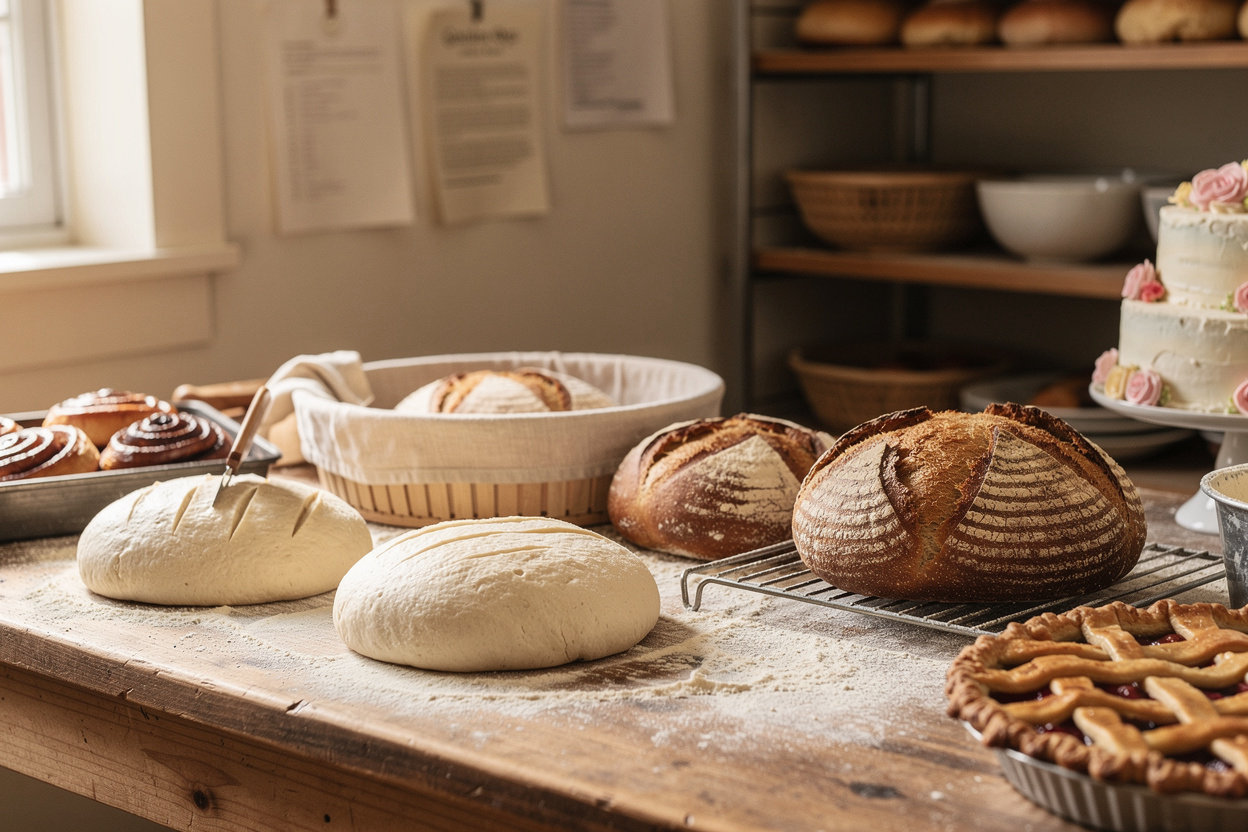
Every morning before the sun is up, the bakehouse in our Short North kitchen starts to smell like something good is coming. That smell is the result of a process we rarely hurry, and it's the reason our sourdough tastes the way it does. Here's a look at how we make it.
It Starts With a Living Starter
Sourdough doesn't use commercial yeast. It relies on a starter, a living mix of flour and water that's full of wild yeast and friendly bacteria. We feed our starter regularly so it stays strong and active, and we use it as the engine for every loaf we bake.
A healthy starter is a little like a good neighbor: it shows up consistently, and you can tell when something's off. When it's bubbly, rising predictably, and smelling pleasantly sour, we know it's ready to work. When it's sluggish, we give it more time and attention before it goes into a dough.
Mixing and the Long, Slow Rise
Once the starter is ready, we combine it with flour, water, and salt. Then comes the part that takes patience: bulk fermentation. The dough rests and rises over many hours, not minutes. During that time, the yeast and bacteria go to work, slowly breaking down the flour and building the complex, tangy flavor you taste in every bite.
This long fermentation also does something you can see. It develops the gluten network and creates the gas bubbles that become the open, irregular crumb inside the loaf. Rushing this stage gives you a flatter, denser bread. Letting it take its time gives you character.
During the rise, we fold the dough a few times. Folding means gently stretching the dough over itself, which strengthens it without knocking out the air. It's a quiet, almost meditative job, and it's one of the reasons our loaves hold their shape so well.
Shaping by Hand, Every Night
After the bulk rise, the dough is divided and shaped by hand. We do this in the evening, and it's one of the most important moments in the whole process. A good shape gives the loaf tension on its surface, which helps it hold its form in the oven and gives you that handsome, rustic look.
Each loaf is placed into a proofing basket for a final, cooler rise. We often do this slowly overnight in the refrigerator. Cold proofing deepens the flavor even further and gives us flexibility in the morning, so the bread is ready to bake at just the right moment.
Baking Fresh Every Morning
We bake in the early morning so the bread is warm and ready when you walk in. Each loaf is scored, which means we make a few deliberate cuts across the top before it goes into the oven. Those cuts guide how the loaf expands in the heat and give the crust its signature look.
Baking creates the crackly, golden crust and the soft, tender interior at the same time. When the loaves come out, they need to cool before they're cut. We know it's tempting to slice in right away, but giving the bread time to set keeps the crumb from turning gummy.
Tips From Our Kitchen to Yours
A few things we'd suggest if you're taking a loaf home:
- Store your sourdough cut side down on a cutting board, or in a bread bag, at room temperature for the first day or two.
- Avoid the refrigerator, which can dry out bread faster than you'd expect.
- If the crust softens, a few minutes in a warm oven will bring back its crunch.
- For longer storage, slice the loaf and freeze the pieces. You can toast them straight from the freezer.
Have a question about our sourdough, or want to talk through a custom order for your next gathering? Give us a call. We're always happy to chat about bread.